quiet beginnings
Lunar Reference
The Moon In Motion
Learn the eight lunar phases, the histories behind familiar full-moon names, and what it means to be born under a particular lunar phase.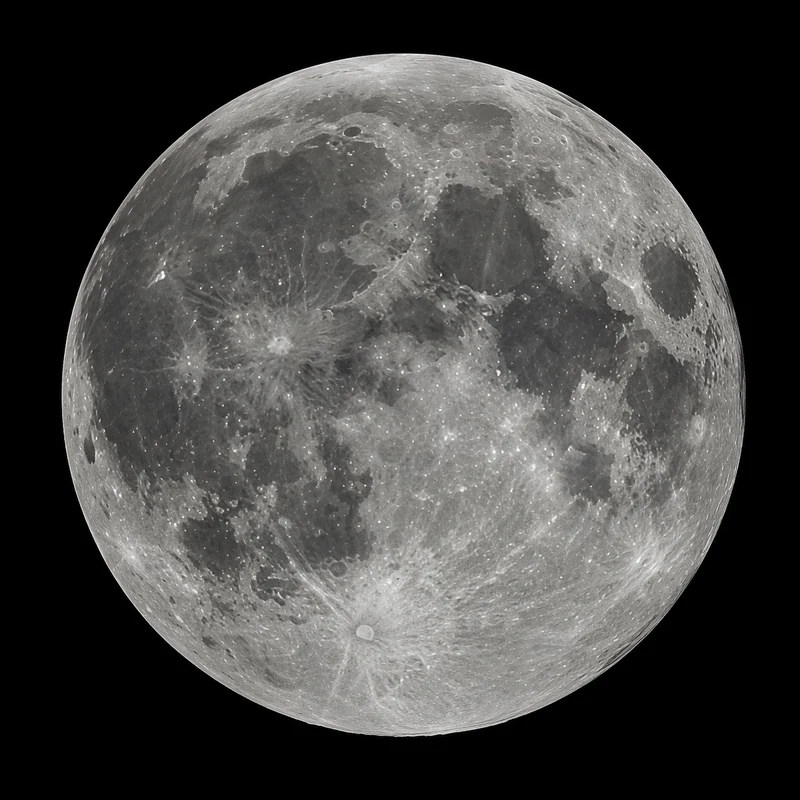
Your Natal Lunar Signature
Discover The Moon You Were Born Under
Get your free birth chart to see your natal Moon phase, how much of the Moon was illuminated, and the named lunar cycle active when you were born.Get Your Free Birth ChartThe Lunar Cycle
Eight phases. One repeating rhythm
The Moon completes its phase cycle in about 29.5 days. The light we see changes as the Moon moves around Earth and our viewing angle to its sunlit half changes.Illustrations use the common Northern Hemisphere orientation; the Moon can appear rotated from other locations.small beginnings
Waxing Crescent
A thin band of light grows after the new moon. This phase is associated with early movement, trust, and giving a new direction enough care to take root.clear decisions
First Quarter
The Moon is one quarter of the way through its orbit, though half of its visible face appears lit. It is often read as a point of action, adjustment, and productive tension.refinement
Waxing Gibbous
The visible light continues to build toward fullness. This phase emphasizes refinement, preparation, and the work of improving what is already underway.clarity and release
Full Moon
Earth is approximately between the Sun and Moon, allowing us to see most of the Moon's illuminated side. Full moons are commonly associated with visibility, culmination, contrast, and release.integration
Waning Gibbous
The Moon begins to lose visible light after fullness. This phase supports integration, sharing what has been learned, and deciding what deserves to continue.clearing and choice
Last Quarter
Half of the Moon's visible face appears lit again, now while waning. It is often associated with review, necessary endings, boundaries, and course correction.rest and review
Waning Crescent
The final crescent narrows before the next new moon. This phase favors rest, reflection, closure, and making room before another cycle begins.Names Across The Year
Why full moons have names
Seasonal moon names helped people track weather, food, work, and changes in the land. The familiar United States list blends Indigenous, Colonial American, and European traditions; names vary across nations and regions.Wolf Moon
A widely used January name linked with the sound and activity of wolves in winter. Its popular modern use blends European and North American almanac traditions.
Snow Moon
February's name points to the heavy snow that often marks late winter in much of northern North America.
Worm Moon
A March name connected with seasonal thaw and the return of visible life in the soil. Historical explanations vary by place and source.
Pink Moon
The April moon is named for moss pink, an early-blooming North American wildflower. The name does not describe the Moon's color.
Flower Moon
May's full moon takes its common name from the abundance of spring flowers across the Northern Hemisphere.
Strawberry Moon
The June name marks the short strawberry harvest in parts of northeastern North America. It does not mean the Moon will appear pink or red.
Buck Moon
July's name refers to the period when new antlers are visibly growing on male deer.
Sturgeon Moon
The August name is associated with lake sturgeon in the Great Lakes and Lake Champlain, where the fish held major seasonal importance.
Corn Moon
A September name tied to ripening and gathering corn. When this is the full moon closest to the autumn equinox, it is also called the Harvest Moon.
Hunter's Moon
The full moon after the Harvest Moon is traditionally called the Hunter's Moon. It usually falls in October, when bright evening moonlight historically extended seasonal work.
Beaver Moon
November's name is linked with beavers preparing for winter and, in some accounts, the season before waterways froze and trapping became difficult.
Cold Moon
December's name reflects deepening winter and long nights. Long Night Moon is another name found in modern almanac lists.
Special Moon Terms
Blue, super, blood, and black moons
These popular names describe timing, distance, or an eclipse. Most are not separate lunar phases.Blue Moon
Usually the second full moon in one calendar month. An older seasonal definition names the third full moon in a season that contains four.
It normally looks the same color as any other full moon.Supermoon
A popular term for a full moon that occurs near perigee, the closer part of the Moon's elliptical orbit around Earth.
It can appear somewhat larger and brighter, though the difference is often subtle without a comparison.Blood Moon
A popular name for a total lunar eclipse, when Earth blocks direct sunlight from reaching the Moon.
Light filtered through Earth's atmosphere can give the eclipsed Moon a copper or red appearance.Harvest Moon
The full moon closest to the Northern Hemisphere's autumn equinox, so it can occur in September or October.
Its evening moonrises once gave farmers more light during the harvest season.Black Moon
An informal modern label most often used for a second new moon in one calendar month.
Definitions vary, and this is not a formal astronomical category.Eclipses
When lunar cycles align with the nodes
Eclipses are precise astronomical events, not separate Moon phases. Their type and visibility depend on the alignment of the Sun, Moon, Earth, and lunar nodes.Lunar Eclipse
A lunar eclipse occurs at a full moon when Earth moves between the Sun and Moon and Earth's shadow crosses the Moon.
It may be penumbral, partial, or total. A lunar eclipse can be seen from the nighttime half of Earth wherever the Moon is above the horizon.Solar Eclipse
A solar eclipse occurs at a new moon when the Moon passes between Earth and the Sun and blocks some or all of the Sun's visible disk.
Solar eclipses may be partial, annular, or total. Visibility depends on the observer's exact location inside the Moon's moving shadow.Eclipse Season
Eclipse seasons are periods when the Sun is close enough to a lunar node for eclipses to occur.
They return roughly every six months and usually contain two eclipses, though a season can occasionally contain three.Natal Eclipse
A natal eclipse means an eclipse was actively in progress at the recorded birth moment.
Mune checks the exact birth timestamp against the global eclipse event. Local visibility is not required. A nearby eclipse on another day is context in some traditions, but it is not the same as being born during one.Sources And Further Reading
Astronomy details are grounded in NASA's lunar phase references, with historical naming context from established astronomy and calendar sources.